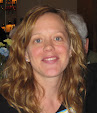
Hey, we're reporting from AWP (and by "we" I mean me and the Medela Pump n' Style--more about that later). I'll give you an update on the panel later, as well. It was so fun!
But I wanted to let you know that I'm also over at nytimes.com as a guest blogger on motherlode today. Check it out.
Thursday, February 12, 2009

Saturday, February 7, 2009
gearing up
AWP is only five days away, and I’ve been thinking of little else. It’s not just the writing conference that’s on my mind, of course. I’ve been thinking about getting on a plane alone, without anyone I need to hold or rock or calm. I’ve been thinking about sleeping through the night and having three glasses of wine if I feel like it. And of course I’ve also been worrying about leaving my girls for three nights. Stella will be fine—I’ve been away from her for that long before—but I haven’t been away from Zoë for more than a few hours at once since she was born. I realize it’s time—she is eleven months old after all. But she still breastfeeds and still wakes up several times a night to nurse, and that’s the part that makes me nervous. Ideally, when I return, she will be weaned from night feedings and be sleeping through the night. (Is that too much to hope for?) But I’m worried that in the process, she will feel abandoned, and when I return, she’ll give me the baby cold shoulder. I can see her doing that.
I am excited for the actual conference and for our panel, “Parents as Writers: Our Children as Subjects,” which will be moderated by Jill Christman, whom I adore. (I’ve posted about her essay “The Allergy Diaries” here.) The panel is studded with mama writer stars: Shari MacDonald Strong, editor of The Maternal is Political and frequent columnist for Literary Mama and mamazine; Sonya Huber, author of Opa Nobody and frequent contributor to Literary Mama; and Jennifer Niesslein, co-founder of Brain, Child and author of the memoir Practically Perfect in Every Way: My Misadventures Through the World of Self-Help and Back. I'll be sitting next to those ladies. How exciting is that? And we’ll be discussing what happens when we turn our writer’s gaze on our children: How does the writing change when we are responsible for more than our art? When parents write about children, how are the ethical considerations different than when it’s the other way around? When do our children’s stories become theirs to tell, not ours?
I’ve been preparing and thinking about this for a few weeks now, and I’ve come across some interesting articles that deal with the topic. I especially like Emily Bazelon’s article “Is This Tantrum on the Record?” which was published in Slate last June. Bazelon challenges writers (and particularly bloggers) to consider whether there are (or should be) ground rules when you write about your children. She says, “When I write about my kids, I’m not only thinking as their mothers. I’m also thinking as a professional writer. Those two identities don’t always align—they just don’t. I like to think that when there’s tension, I err on the side of protecting my kids’ interests, steering clear of any material that’s too embarrassing or private.” But Bazelon admits that she doesn’t trust herself to always do this, so her husband vets all of her writing about their kids.
I’m careful when I write about my kids, especially when I write about them on this blog. I do it infrequently. Partly, this is because the blog isn’t really about my kids; it’s about motherhood and reading and writing and teaching. It’s about how and where these things intersect, how they work together and sometimes against each other. And partly it is because in the face of the confessional, tell-all nature of blogging, I want to be especially careful. I post the occasional anecdote about Stella, list something funny or adorable that she said. But in the back of my mind, there is always a flashing red light reminding me of the potential Googling power of a gaggle of 12-year-olds. At some point, she may want to read what I write about her, and I don’t want her to feel exposed or betrayed when she does.
I feel a little freer when I’m writing for a print publication, when I’m working on an essay or my memoir. It’s true that pieces of this writing could end up online and easily accessed, as well, but still, it feels different, safer. But maybe I’m just fooling myself.
I’d be very interested to hear about your ground rules…are there things you will or will not write about your children? Is there an age at which you think you will (or should) stop writing about them, at least online? How do we balance our need to express ourselves through writing with our children’s right to privacy?
Anyone out there going to AWP? I’d love to meet some of my virtual friends in person! And if you are there, please join our discussion on Thursday morning!
Monday, February 2, 2009
mother words online
Okay, so I'm finally doing it. I'm launching the online version of my Mother Words class in March. Here is the description:
Mother Words Online - March 19 - May 21
Whether you are a new mom or a veteran, whether you gave birth to or adopted your child, in this online class you’ll learn how to take birth and motherhood stories and turn them into art. Weekly lectures, reading assignments and writing exercises will focus on telling details, character development, emotional distance, strengthening your reflective voice, and revision. You can expect to generate two creative nonfiction pieces, and you will have an opportunity to revise and expand one of these into a longer piece. You will receive feedback from your peers and from me through online workshops.
For more information, visit my website. You can also leave a comment below if you are interested. Space is limited.
Woo-hoo!!
Thursday, January 29, 2009
eat, drink, and blog
On Monday night, I had the opportunity to be part of a panel of local folks talking about blogging. The meeting was hosted by the Twin Cities writing/networking group Eat, Drink and Get Published and moderated by Jason DeRusha, who writes Jason’s DeBlog on wcco.com. The panelists included Stephen Regenold of The Gear Junkie, Kay and May of the StarTribune’s Cribsheet (I finally got to meet them!), and Justin Piehowski, who writes Minnesota Blog Cabin on MinnPost and produces Sheletta Brundidge’s Emmy-winning blog. And then there was, ahem, me (with the smallest blog of the bunch).
It was so interesting to hear how the other panelists got started. Some were motivated by money, but most were motivated simply by passion. We are all passionate about our subject matter, whether it be supporting new parents, writing about blogs, testing the newest mountain bike, or creating a space for motherhood literature to be taken seriously. Passion is the thing that birthed our blogs and passion is what keeps us posting.
According to Universal McCann, 184 million people worldwide have started a blog, and in the State of the Blogosphere, Technorati says that bloggers are:
- Not a homogenous group: Personal, professional, and corporate bloggers all have differing goals and cover an average of five topics within each blog.
- Savvy and sophisticated: On average, bloggers use five different techniques to drive traffic to their blog. They’re using an average of seven publishing tools on their blog and four distinct metrics for measuring success.
- Intensifying their efforts based on positive feedback: Blogging is having an incredibly positive impact on their lives, with bloggers receiving speaking or publishing opportunities, career advancement, and personal satisfaction.
I’m not sure how savvy I am, and I’m certainly not able to post as much as I’d like, but I do know this: this small space on the Internet has definitely had a positive impact on my life, and it’s because of all of you. Two years ago (today), I began this blog to create to a place where writing by women about motherhood would be taken seriously as literature. I also wanted to develop a readership for my book. But I didn’t expect to become part of such a rich and varied community of mothers and writers living and mothering and trying to get words on the page. I am so grateful to all of you and to your words. Thank you!
I’m interested in hearing why you started to blog and how your perception of blogging has changed (if it has) since you began.
Cheers!
p.s. I am taking the advice of the other panelists and uploading a picture of myself. I guess I didn’t realize it was so important. Is it?
Monday, January 26, 2009
still reading
I haven’t posted about what I’m reading in a while and this is probably because I’m all over the place, reading three books at once. I prefer to read one book at a time, submerging myself completely in one voice, one plot, etc. But this kind of reading doesn’t fit into my life right now.
I did finish a novel a few weeks ago: Anzia Yezierska’s Bread Givers, first published in 1925. Once considered a classic and now largely forgotten, it’s the story of Sara Smolinsky, a Jewish immigrant, who rebels against the traditional roles of women and the authority of her father. It’s set in the Lower East Side at the turn of the century, but what Yezierska says about poverty, the immigrant’s experience, and the “American Dream” seems to hold true even today, so if you haven’t read this novel, you should.
The books I’m currently reading are: The Best American Essays 2008, Writing Home by Cindy LaFerle, and The Middle of Everything by Michelle Herman. In the morning, to warm up my brain at the coffee shop, or to take a break from my memoir, I’ll read a few pages, or even a few paragraphs, of an essay from BAE. In the afternoon while I’m sitting in the car in front of Stella’s preschool with Zoë asleep in the back seat, I’ll read one of LaFerle columns or a few pages of Herman’s memoir.
Let me tell you what I love about Best American Essays. I love all those different voices and experiences, ways of seeing the world, stacked next to one another. I love the prose, discovering how someone else phrases the thought in my head. I love seeing a version of myself reflected in someone else’s experiences. And I was thrilled to discover that this newest collection begins with a mother’s story: Patricia Brieschke’s “Cracking Open,” an essay about the long hospitalization of Brieschke’s son, Ollie, when he was two weeks old. Her prose is so tight, her writing so immediate, that I felt I might vomit the first time I read it. (This sounds like a bad thing, but it’s not. This short, desperate piece is full of heartbreak.)
BAE 2008 is full of gems: Bernard Cooper’s “The Constant Gardener” and Lauren Slater’s “Tripp Lake.” I read one, go back and read it again. It totally works for my current attention span.
LaFerle’s Writing Home works the same way. This book is a compilation of newspaper columns and short essays written over a twelve year period, most of them for The Daily Tribune of Royal Oak, Michigan. LaFerle’s voice is intimate and inviting, and the more I read, the better I feel I know and like her. It’s interesting because I’ve never read a print newspaper faithfully enough to fall in love with a columnist. But I do read blogs that way, and this book is like having the posts of one of my favorite bloggers printed and compiled. I can read one or several at a time, then put them down and come back a day or two later. It’s a perfect book for me right now.
I’ll report back on Herman when I finish The Middle of Everything. This book can be read a chapter at a time because its chapters are slightly essayistic, circling around a topic rather than pushing us along one narrative line. But I know that when I finish this book, the sum of Herman’s chapters will leave me with something larger than her story alone. She is a wonderful writer, her prose precise and engaging.
Revising the book is slow, very slow, but it’s making a difference. It’s amazing how much “stuff” I had in there because it was “good enough.” Now that I am retyping the whole thing, “good enough” is falling away. Not to mention that I am a much better writer than I was four years ago when I started writing it. 13 pages down, 298 to go.
Tuesday, January 20, 2009
glued to the television
I'm sitting in front of the television, getting chills from the power of collective hope. Oh how I wish I were in D.C. right now!!
Thursday, January 15, 2009
a little like golf
My grandpa, Spencer, will be 100 years old on January 19th, and we’re having a big party for him on Saturday. 100 years old! It’s difficult to imagine the changes he’s witnessed in his lifetime. He has lived to see 19 different presidents in office (including Obama, for whom he voted).
Grandpa was born in 1909 in Granite Falls, a small town in Western Minnesota. He was the second youngest of nine children born to his Swedish immigrant parents. He grew up poor, on the wrong side of the tracks, but that never stopped him.
Grandpa was born in 1909 in Granite Falls, a small town in Western Minnesota. He was the second youngest of nine children born to his Swedish immigrant parents. He grew up poor, on the wrong side of the tracks, but that never stopped him.
In high school he met my grandmother, Lucille, and he wooed her. They married in 1932, while our country and their small community were mired in the Depression. After the Depression, they built a greenhouse next to their house and became florists, so, as my grandpa says, “We could be our own bosses. We could live our own lives.” My grandparents were married for 67 years, until Lucille died in June of 1999.
After Grandma died, I was worried that Grandpa would whither. You hear of it happening often enough. But he didn’t. He eyes would fill with tears at the mention of Grandma’s name, and when he spoke of her, his voice wavered. But he didn’t give up living. He wasn’t ready. Instead, at the age of 90, he taught himself to cook, and he began work on his latest golf invention, a “swing tuner” which he called, simply, the Gadget.
A natural athlete, Spencer was captain of his high school basketball team. He was a hunter and a fisherman. At age 19, when the baseball coach wouldn’t play him, he swore off baseball and took up golf. He hit balls into a burlap sack outside his house until he was good enough to play against the best golfers in the state. He can remember what he shot in 1939, in 1945, in 1971. He has three holes-in-one on his golf résumé. He has been a greens keeper and a golf instructor, and it’s as a golfer than many people know him best.
One of the things I know disappoints him is that none of his granddaughters have taken the sport seriously. I used to go to the driving range with him, and he would adjust my grip and my stance, tell me to “keep that elbow in,” to “swing through the ball,” to “close the face of that club,” to “keep your head down.”
I have a pretty good golf swing because Grandpa, but I don’t play golf. He always used to tell me that golf was the most difficult sport you could play because you had to remember everything: the grip, the backswing, the elbow in, the stance. If one thing goes, you won’t make it. You can’t be sloppy. But it was difficult for me to remember everything I needed to remember all at once. And that’s where the practice came in. “It has to be second nature,” he would say. “You have to practice these things enough so that they feel natural.”
Before Stella was born, I would go to the driving range with him once a week in the summer, but after she was born I was too busy juggling childcare and graduate school. I couldn’t commit to golf. But I want my grandpa to know this: I still use what he taught me.
In my classes this fall I lectured about dialogue and scene, voice and character, and as I did these things, I said, “Practice. This will become second-nature.” I felt as if I were channeling my grandpa. You see, writing isn’t so different from golf. You need all of the aspects of good writing (strong characters, evocative prose, realistic dialogue, sensory details) to be a strong writer. In golf, you may know how to chip, but if you can’t putt, you’re lost. As a writer, your prose may be lovely, but if your characters are flat, it doesn’t matter. You can practice these aspects of craft separately to master them, just as you can in golf. But ultimately, they need to become a part of you. Like a golf swing, the craft of writing needs to be organic, natural.
I hope my grandpa knows that I’ve listened and I’ve practiced. I hope he knows what I’ve learned from him, even though I rarely step onto a golf course.
There will be over 70 people at my grandpa’s party on Saturday, a testament to the kind of person he is. He is without guile. He makes friends easily. He sees commonalities where many people see differences. He is forever positive, an avid reader who is also addicted to CNN.

If you wouldn’t mind, could you raise your glass for Spencer this weekend and say a wish for him? He’s a stubborn old Swede, and I love him.
Subscribe to:
Posts (Atom)


 Posts