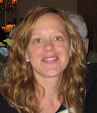
Oh, what to say? How to begin? Vicki Forman’s memoir, This Lovely Life, is so close to my heart.
When I initially started reading Vicki’s blog, Speak Softly, I didn’t realize that Evan had been born prematurely. I was caught up in Vicki’s lovely writing and in her voice as an advocate for children with special needs. It wasn’t until I read her archives and her column at Literary Mama that I realized Evan was a surviving twin and had been born at 23-weeks.
23-weeks is on the cusp of viability. If you are not a preemie parent, you may gasp and shake your head, but it is difficult to imagine what this means. If you are a preemie parent or have spent time in a NICU, 23-weeks means something else: it means either death or months in the hospital—months of good days followed by devastating days. It means brain bleeds, retinopathy of prematurity, severely underdeveloped lungs.
The Lovely Life is one of the best motherhood memoirs I have read. It details the first years of Evan’s life, the ups and downs that Vicki and her husband, Cliff, lived through after the twins’ birth: Ellie’s death after four days and Evan’s intensely long and heartbreaking stay in two hospitals. It’s the story of how Vicki overcomes her grief and learns to love her son. It’s a story about a different side of motherhood, a story of how one woman learns to become a different kind of mother.
For preemie parents, this book is a must-read. My story is so different from Vicki’s. Stella was born at 32-weeks, and didn’t face the intense challenges that Evan and Ellie faced. But still, I have marked dozens of pages in The Lovely Life where I nodded my head in agreement, where I saw my own experiences and thoughts reflected on the page.
One of the things I respect so much about this book is the fact that Vicki does not sugarcoat anything. Vicki lays bear her emotions and is not afraid to let the messy stuff—the raw grief and sharp anger—onto the page.
Brett Lott has a wonderful essay called “Toward a Definition of Creative Nonfiction” in The Fourth Genre: Contemporary Writers of/on Creative Nonfiction. (You can read a condensed version of his essay here.) In it, Lott says that to write successful creative nonfiction, you must: “be ruthlessly honest about how you see yourself in relation to others” and you “can’t be self-righteous or self-serving.”
Vicki is both ruthlessly honest and not at all self-serving. The ethical questions of how early is too early, and what kind of life is a life are in the book, in the details of Vicki’s story, but it’s clear that she is not writing with an agenda in mind.
Vicki graciously agreed to an e-mail interview, so I'm honored to have her here at Mother Words today:
Kate: Can you tell me a little about how you began writing the book?
Vicki: The book started as a series of journal entries I began a few weeks after the twins were born. I didn’t know at that point that I had a book, or that I would write a book about this experience, but I suspected I might and I knew that if I did, I would want to have a record of specific details from that time--things like what doctors said, or what I said in return.
I continued to keep that journal as Evan’s hospital course became increasingly complicated. In the end, the journal was about nineteen single-spaced pages that constituted the original backbone of the book. Some of those entries worked their way into the book. The rest became notes that helped me construct the narrative.
My first attempts to craft a story beyond those notes became the essay, “Coming to Samsara.” That piece was published in the Santa Monica Review and then reprinted in Suzanne Kamata’s anthology, Love You to Pieces: Creative Writers on Raising a Child With Special Needs. I’m a big believer in getting smaller sections of a longer work into print whenever possible: it allows a writer to keep going with the project, while also permitting pieces of the work to leave the house. That’s good for the writer, and good for the writing.
Kate: Your present “now” self is always close to the surface in This Lovely Life. You reference events and challenges that arise in the future and reflect on your emotional state at the time with your “now” sensibilities. I’m curious about whether this style arose organically for you or whether you made a conscious effort to craft this perspective into the story.
Vicki: The first drafts of the story were a straightforward, chronological telling. As I began to revise, I saw that I would need what you refer to as the “later” voice--one that I called my “reflective” voice—as a strategy for commenting on the events. It felt important to me to give the reader a sense that amidst all the hard news and setbacks we encountered, we had found a way to mend and heal as a family. I could only offer up that perspective by flashing forward with voice and point of voice, into that “later” person you so rightfully notice.
Kate: Your honesty is really breathtaking and so very brave. Was it difficult to get to a place where you could be this honest on the page?
Vicki: I’m laughing at the question, because in fact I had a sort of the opposite difficulty: I knew the material was tough and my feelings were quite honest, so I focused on making the tough stuff more bearable. I worked a lot on voice and narrative distance so that even if the facts and details were honest, the reader had something of a filter, via the narrator, for that honesty.
Above all, I knew that I did not want to elicit pity, because I’ve come to see that often explicit honesty can generate pity within the reader. So I tried to tell it like it was, but in a way where readers might recognize examples of honest feelings within themselves, but also understand that honesty can be processed, or incorporated, and amid the honesty life and perspective and good humor do go on.
Kate: What was the most challenging part of writing This Lovely Life?
Vicki: I had a rare kind of grace accompanying me during the writing, in which I felt very connected to the material, the goals of the book, its urgency and purpose. That sense of purpose and urgency carried me along so effectively that my typical writer doldrums (self-doubt, confusion, procrastination) were mostly pretty far away. I don’t know why the writing came to me the way it did, but I’m eternally grateful.
My biggest challenges came not in writing the book, oddly, but in selling it. When the book was done, I thought I had done a decent job. There was a narrative arc, and a cohesion, and the writing was more or less something I could feel proud about. Then my agent was unable to sell it.
We received the most heartbreaking rejections, with editors reporting that they loved the writing but had no idea how to market the book or find its audience. After a dozen or so of these, I withdrew the book from submission and told my agent I wanted to figure things out on my own. I had to regroup in a pretty fundamental way. The first decision I made was to submit to the Bread Loaf Writers’ Conference Bakeless Prize. While I waited to hear, I began to proceed with other options, like small presses. Before I had to figure out my next steps, the book won the prize.
But not being able to sell the book shook my confidence in a way that had not happened in the actual writing, so that was an interesting twist for me, and reminded me too that writers have to be made of steel from start to finish. The job doesn’t end when the writing ends.
Kate: What would you tell other writers about this process?
Vicki: My path to publication was certainly not orthodox, nor would I recommend it, but for me, thankfully, it worked, presenting a once in a lifetime event that I don’t expect to repeat itself. Next time around, I’ll have to figure out how to convince an editor. That’s the way most writers do it, right?
Kate: I’m a very interested in the revision process. Between the time you won the Bakeless Prize and This Lovely Life was ready to go to print, your dear Evan died. Did his death affect how you reread and revised your manuscript? If so, how?
Vicki: I was scheduled to revise the book the summer of 2008, with a fall deadline. There were some scenes to include, and some deeper characterization to work on. Then my son died, and all bets were off. My editor told me to take all the time I needed, my friends offered to help in whatever way they could, and I simply felt my way, in my own good time, back to the writing.
The first change I made to the book was to add the epilogue, which I had drafted as my last piece (“Saying Goodbye”) for the column I wrote at the time for Literary Mama. After I wrote the epilogue I knew I could reapproach the book, that I had to, that my job wasn’t done and that as a writer I would have to find a way to do that job. It was not easy, but the book itself seemed to provide an actual physical solace and comfort. The phrase, “all we have are our words,” certainly took on a profound and resonant meaning for me.
Kate: Now that This Lovely Life is published, how does it feel to see your lives in print and have people react to your experiences? What are some of the responses you are getting?
Vicki: I like to say I wrote the book I wish had been there for me when I was going through these events. Now that the book is in print, I do find myself hearing from readers for whom this statement resonates. They recognize themselves in the events, the emotions, and the grief. Many of these emotions and reactions are in fact universal. And while I can see why mainstream publishing felt the story was too hard, it is unfortunately the case that grief and loss and death happen over and over in our culture, we just don’t get to read stories about it. We like happy endings, and miracles and so-called success. To put a face to a life like Evan’s, or to render honest feelings of imperfect motherhood like mine—it’s a gift for me as a writer to even approximate that goal.
Thank you, Vicki, for taking the time to answer these questions! Don’t forget that you can see Vicki in person on Thursday, September 24th at 7 p.m. at the Loft Literary Center in the Open Book in Minneapolis. I will be reading with Vicki and Kate St. Vincent Vogl. Free and open to the public!
Showing posts with label special needs. Show all posts
Showing posts with label special needs. Show all posts
Thursday, August 27, 2009

Friday, May 15, 2009
a cough, a festival, and a few words about stories
I mentioned in my mother’s day post that Zoë was sick and that—after being on the receiving end of her croupy cough—I was getting sick, as well. Well I did get sick—head-exploding, coughing-until-I-puked sick. I had to take Zoë into the ER early Monday morning because she was barking like a seal, poor dear, and by the end of the day I was coughing uncontrollably, as well. And then, after Zoë wiped her snotty hand across D’s face—she thought this was very funny—he got sick, too. (Stella, so far, is fine. Knock on wood.)
I’m feeling much better now, but as a precaution, I’m going to stock up on cough suppressant, cough drops, and antibacterial hand gel so I’ll be ready for the Memoir Festival this weekend. As a mother of a former preemie, I know as much about hand hygiene as anyone. I will douse myself in antibacterial gel before I shake even one hand. I promise.
My fear, however, is that I will begin coughing loudly during Bernard Cooper’s reading tonight, and I’ll have to leave the auditorium. That would really suck. I have been waiting for this too long to have to banish myself into the hallway. Keep your fingers crossed for me. (And if you want to attend the memoir festival, there’s still time. You can register online today or in person tomorrow morning. Cooper’s reading is open to the public, as well! For more information, click here.)
I’ll report on the festival next week (and maybe even this weekend if I can squeeze in a post), but until then, I want to mention a wonderful thing I read last night.
I have had the anthology Love You To Pieces: Creative Writers on Raising a Child with Special Needs on my shelf for a few months. (If you read this blog with any regularity, you know that this is, sadly, my habit. I just don’t have very much time to read non-teaching writing right now.) But last night, I was drawn to this book. I had just posted a lecture for my online Mother Words class about structure and Penny Wolfson’s wonderful “Moonrise”—which I’ve posted about here and here—and I was thinking of the ways that so many of the mother-writers I know write about their children with special needs. So I opened Love You to Pieces. This is what Suzanne Kamata writes in the introduction:
She ends the introduction with this: “…literature eases loneliness and helps us understand and empathize with those unlike ourselves.”
In my online class, we have been talking about this very thing—the way stories, as one of my wonderful students said, “can humanize us.” Reading a wide variety of voices—those of mothers and non-mothers alike—makes me a better person, helps keep life in perspective, helps, as I said on Sunday, not take my life or my family for granted.
I read the first few pieces in Love You to Pieces—Vicki Forman’s amazing “Coming to Samsara” about the birth of her twins at 23 weeks gestation; Hannah Holborn’s “Without Strings,” the heart-wrenching story of a mother dealing with her daughter’s diagnosis of Angelman’s; Ellen Bihler’s poem about the mother of a baby with spinal muscular atrophy falling into hopelessness; and Marcy Sheiner’s “A Homecoming,” the story of a mother isolated from her friends because of her son’s brain damage. This was all I could manage. My heart felt too heavy to continue. But underneath this heaviness was something else: gratitude. The words of these writers are brave and necessary and life-changing, and I want to send out a shout of thanks to these wonderful writers and to Suzanne, who pulled this book together.
I also want to make sure everyone knows that Vicki Forman’s memoir, This Lovely Life, will be released this summer. And also this exciting news: Vicki has agreed to come to Minnesota this fall to be part of the 3rd Annual Mother Words Reading, which will also feature the wonderful local writer Kate St. Vincent Vogl, author of Lost and Found: A Memoir of Mothers. I will be bombarding you with details as the date approaches, but I want you to put it on your calendars now: September 24th, 7 p.m. at the Loft Literary Center in Minneapolis. Everyone is welcome!!
I’m feeling much better now, but as a precaution, I’m going to stock up on cough suppressant, cough drops, and antibacterial hand gel so I’ll be ready for the Memoir Festival this weekend. As a mother of a former preemie, I know as much about hand hygiene as anyone. I will douse myself in antibacterial gel before I shake even one hand. I promise.
My fear, however, is that I will begin coughing loudly during Bernard Cooper’s reading tonight, and I’ll have to leave the auditorium. That would really suck. I have been waiting for this too long to have to banish myself into the hallway. Keep your fingers crossed for me. (And if you want to attend the memoir festival, there’s still time. You can register online today or in person tomorrow morning. Cooper’s reading is open to the public, as well! For more information, click here.)
I’ll report on the festival next week (and maybe even this weekend if I can squeeze in a post), but until then, I want to mention a wonderful thing I read last night.
I have had the anthology Love You To Pieces: Creative Writers on Raising a Child with Special Needs on my shelf for a few months. (If you read this blog with any regularity, you know that this is, sadly, my habit. I just don’t have very much time to read non-teaching writing right now.) But last night, I was drawn to this book. I had just posted a lecture for my online Mother Words class about structure and Penny Wolfson’s wonderful “Moonrise”—which I’ve posted about here and here—and I was thinking of the ways that so many of the mother-writers I know write about their children with special needs. So I opened Love You to Pieces. This is what Suzanne Kamata writes in the introduction:
I’m the kind of person who looks to literature to make sense of life, so when I learned that my daughter was deaf and had cerebral palsy, I sobbed for a while and then logged onto Amazon.com. I was looking for deep and sustaining stories to guide me on the long path ahead, and while I found many cheery volumes offering hope and inspiration, that wasn’t exactly what I wanted. I needed to know that others had felt the same kind of pain, fear, and anger that I was feeling, and I wanted a better idea of how my daughter’s disability would affect my marriage, my son, my work, and other aspects of our lives. The best novels, short stories, and memoirs can pull us into the lives of their characters and provide a deeper understanding of others, while poetry can distill and illuminate moments that longer essays gloss over.
She ends the introduction with this: “…literature eases loneliness and helps us understand and empathize with those unlike ourselves.”
In my online class, we have been talking about this very thing—the way stories, as one of my wonderful students said, “can humanize us.” Reading a wide variety of voices—those of mothers and non-mothers alike—makes me a better person, helps keep life in perspective, helps, as I said on Sunday, not take my life or my family for granted.
I read the first few pieces in Love You to Pieces—Vicki Forman’s amazing “Coming to Samsara” about the birth of her twins at 23 weeks gestation; Hannah Holborn’s “Without Strings,” the heart-wrenching story of a mother dealing with her daughter’s diagnosis of Angelman’s; Ellen Bihler’s poem about the mother of a baby with spinal muscular atrophy falling into hopelessness; and Marcy Sheiner’s “A Homecoming,” the story of a mother isolated from her friends because of her son’s brain damage. This was all I could manage. My heart felt too heavy to continue. But underneath this heaviness was something else: gratitude. The words of these writers are brave and necessary and life-changing, and I want to send out a shout of thanks to these wonderful writers and to Suzanne, who pulled this book together.
I also want to make sure everyone knows that Vicki Forman’s memoir, This Lovely Life, will be released this summer. And also this exciting news: Vicki has agreed to come to Minnesota this fall to be part of the 3rd Annual Mother Words Reading, which will also feature the wonderful local writer Kate St. Vincent Vogl, author of Lost and Found: A Memoir of Mothers. I will be bombarding you with details as the date approaches, but I want you to put it on your calendars now: September 24th, 7 p.m. at the Loft Literary Center in Minneapolis. Everyone is welcome!!
Wednesday, October 8, 2008
penny wolfson on palin
Penny Wolfson, whom I quoted in my long and controversial post, has a wonderful essay about Palin, disability and reproductive rights at Beacon Broadside.
"Moonrise" is featured in Suzanne Kamata's new anthology Love You to Pieces: Creative Writers on Raising a Child with Special Needs, which was published by Beacon. I haven't read the book yet, but I know I'm going to love it. It contains writing from some of my favorite mother writers.
"Moonrise" is featured in Suzanne Kamata's new anthology Love You to Pieces: Creative Writers on Raising a Child with Special Needs, which was published by Beacon. I haven't read the book yet, but I know I'm going to love it. It contains writing from some of my favorite mother writers.
Thursday, July 3, 2008
grateful
I’ve been feeling so stretched lately—juggling the two girls and work and life. D has been working long days, and sometimes I feel like screaming. (I did, in fact, scream in the car the other day when Zoë was wailing and Stella was whining. I just screamed, and I scared the sh*t out of Stella with my outburst. A really proud moment for me.)
Luckily, we got away to my mom’s cabin last weekend—all four of us! I spent months there every summer as a child, and it’s still one of my favorite places. Stella loves it as much as I do, and she was so excited. She chattered the WHOLE WAY (4 hours) up there, asking, “Are we there yet? How much farther? When are we going to get there?”
I went running a couple of times, read a little and napped. Monday morning was gorgeous. D and I sat on the dock drinking coffee as Stella threw pieces of bread into the lake for the sunfish. (Zoë was up at the cabin being bounced by grandma.) It was breezy, and I just lay on my back, listening to the rustling of the Aspen trees, their leaves waving in the blue blue sky like a thousand tiny hands.
Then D and Stella and I went for a canoe ride and saw two bald eagles perched in an oak tree. One flew off as we approached, but the other sat there, head tilted to the side, watching us paddle around the point. A bald eagle never fails to make me draw breath. I can’t get over the fact there were so few of them—I never saw even one in Minnesota as I was growing up—and now I can canoe 100 feet away from one.
I didn’t have a chance to pick up any of the wonderful novels you suggested, so I took up a book that has long been on my shelf: Before and After Zachariah by Fern Kupfer. It is a memoir about what happens to Kupfer and her family when her son, Zachariah, is born severely brain-damaged. It’s heartbreaking. But that doesn’t even begin to describe it. As I read, there was a jabbing pain in my chest, and I felt, quite literally, as if my heart were breaking.
As you know from the books I discuss here, I love honesty. I have so much respect for a writer who writes the hard truth, even when this truth may cast her in a less than flattering light. Kupfer is not afraid to put it all out there—the anger, the sadness, the way that Zachariah’s condition wreaked havoc on her family. She’s not afraid of writing anything (or so it seems), and for this, I respect her tremendously.
At two years, four months, Zachariah is institutionalized. He cannot walk or stand or sit or talk. He cannot hold up his head. His developmental abilities are that of an infant. He cries constantly, only ceases when he is being held and rocked. Kupfer and her husband pass him back and forth, becoming more and more distant and angry with each other. For years they don’t get answers from the medical community to their long list of scary questions.
She writes: “There is a part of me that unequivocally rejects Zach, rejects who and what he is, as part that turns from him, even as I hold him in my arms, delighted to feel his breath against my neck, to kiss his face.”
She writes: “I’m not sure anything we’ve done for Zach has really helped him—I know it hasn’t in any significant way. What has helped me more than anything else has been talking to other women who have handicapped children, a cruel common denominator that cuts across the divisions of economics, of education, of social class.”
She writes: “Often I’m angry at strangers. Dull, sloppy women in supermarkets blithely wheeling their normal kids. Sometimes any woman with normal kids seems to me carelessly unaware of her good fortune. Last summer in Virginia I was sitting with Jan, Eddie and Zach in their strollers, waiting to go into the therapy room. Across the room a woman was chasing a toddler who looked teasingly over his shoulder as he ran, shrieking with delight. But she meant business. When she caught him, she smacked his behind several times until his giggles turned to tears. “Stay put,” she commended, putting him down in a chair, “and don’t move. Don’t you ever move.” Jan and I sat looking at our children. Jan turned to me with clenched teeth: “I feel like shaking her,” she said.”
This book once again confirms for me the need to respect people’s lived experiences. There are those who judged the Kupfers for institutionalizing Zach. But how can anyone judge her, them, when they didn’t live their lives, didn’t survive the day-to-day with Zach and his many needs?
Some of the most heartbreaking parts of the book for me were the scenes with Zach’s older sister, Gabi. How faithfully she loved him, how graceful she was, at age five, when all of the attention was focused on Zach. At one point she says to her mother, “I’m just feeling very hostile toward Zach…I think he gets entirely too much attention around here. He’s all you ever talk about. Sometimes I just feeling like yelling, ‘You dumb baby, you stupid-liar-dumb baby.’”
Kupfer agrees to let Gabi yell that to him the next morning, but the next morning, when Zach wakes crying, Gabi calls her mother instead: “He needs you.” When Kupfer asks Gabi if she wants to yell at him, she says, “’No, I don’t feel like it anymore.” Then thoughtfully, ‘Maybe just telling you was enough.’”
This book was first published in 1982, and reprinted in 1988 and 1998, so the language she uses to describe her son’s condition is not the language most people in the special needs community would use today, but I hope no one will hold this against her.
Near the end of the book, Fern Kupfer addresses her readers: “Those of you who are reading this and have normal children, those whiney miracles, fall to your knees by their bedsides; let gratitude burn forever in your breast, an eternal pilot light.”
I promise, Fern, to be grateful. I promise not to scream in the car anymore. I promise to think of Zach each time I begin to complain about my hectic life with two healthy kids.
Luckily, we got away to my mom’s cabin last weekend—all four of us! I spent months there every summer as a child, and it’s still one of my favorite places. Stella loves it as much as I do, and she was so excited. She chattered the WHOLE WAY (4 hours) up there, asking, “Are we there yet? How much farther? When are we going to get there?”
I went running a couple of times, read a little and napped. Monday morning was gorgeous. D and I sat on the dock drinking coffee as Stella threw pieces of bread into the lake for the sunfish. (Zoë was up at the cabin being bounced by grandma.) It was breezy, and I just lay on my back, listening to the rustling of the Aspen trees, their leaves waving in the blue blue sky like a thousand tiny hands.
Then D and Stella and I went for a canoe ride and saw two bald eagles perched in an oak tree. One flew off as we approached, but the other sat there, head tilted to the side, watching us paddle around the point. A bald eagle never fails to make me draw breath. I can’t get over the fact there were so few of them—I never saw even one in Minnesota as I was growing up—and now I can canoe 100 feet away from one.
I didn’t have a chance to pick up any of the wonderful novels you suggested, so I took up a book that has long been on my shelf: Before and After Zachariah by Fern Kupfer. It is a memoir about what happens to Kupfer and her family when her son, Zachariah, is born severely brain-damaged. It’s heartbreaking. But that doesn’t even begin to describe it. As I read, there was a jabbing pain in my chest, and I felt, quite literally, as if my heart were breaking.
As you know from the books I discuss here, I love honesty. I have so much respect for a writer who writes the hard truth, even when this truth may cast her in a less than flattering light. Kupfer is not afraid to put it all out there—the anger, the sadness, the way that Zachariah’s condition wreaked havoc on her family. She’s not afraid of writing anything (or so it seems), and for this, I respect her tremendously.
At two years, four months, Zachariah is institutionalized. He cannot walk or stand or sit or talk. He cannot hold up his head. His developmental abilities are that of an infant. He cries constantly, only ceases when he is being held and rocked. Kupfer and her husband pass him back and forth, becoming more and more distant and angry with each other. For years they don’t get answers from the medical community to their long list of scary questions.
She writes: “There is a part of me that unequivocally rejects Zach, rejects who and what he is, as part that turns from him, even as I hold him in my arms, delighted to feel his breath against my neck, to kiss his face.”
She writes: “I’m not sure anything we’ve done for Zach has really helped him—I know it hasn’t in any significant way. What has helped me more than anything else has been talking to other women who have handicapped children, a cruel common denominator that cuts across the divisions of economics, of education, of social class.”
She writes: “Often I’m angry at strangers. Dull, sloppy women in supermarkets blithely wheeling their normal kids. Sometimes any woman with normal kids seems to me carelessly unaware of her good fortune. Last summer in Virginia I was sitting with Jan, Eddie and Zach in their strollers, waiting to go into the therapy room. Across the room a woman was chasing a toddler who looked teasingly over his shoulder as he ran, shrieking with delight. But she meant business. When she caught him, she smacked his behind several times until his giggles turned to tears. “Stay put,” she commended, putting him down in a chair, “and don’t move. Don’t you ever move.” Jan and I sat looking at our children. Jan turned to me with clenched teeth: “I feel like shaking her,” she said.”
This book once again confirms for me the need to respect people’s lived experiences. There are those who judged the Kupfers for institutionalizing Zach. But how can anyone judge her, them, when they didn’t live their lives, didn’t survive the day-to-day with Zach and his many needs?
Some of the most heartbreaking parts of the book for me were the scenes with Zach’s older sister, Gabi. How faithfully she loved him, how graceful she was, at age five, when all of the attention was focused on Zach. At one point she says to her mother, “I’m just feeling very hostile toward Zach…I think he gets entirely too much attention around here. He’s all you ever talk about. Sometimes I just feeling like yelling, ‘You dumb baby, you stupid-liar-dumb baby.’”
Kupfer agrees to let Gabi yell that to him the next morning, but the next morning, when Zach wakes crying, Gabi calls her mother instead: “He needs you.” When Kupfer asks Gabi if she wants to yell at him, she says, “’No, I don’t feel like it anymore.” Then thoughtfully, ‘Maybe just telling you was enough.’”
This book was first published in 1982, and reprinted in 1988 and 1998, so the language she uses to describe her son’s condition is not the language most people in the special needs community would use today, but I hope no one will hold this against her.
Near the end of the book, Fern Kupfer addresses her readers: “Those of you who are reading this and have normal children, those whiney miracles, fall to your knees by their bedsides; let gratitude burn forever in your breast, an eternal pilot light.”
I promise, Fern, to be grateful. I promise not to scream in the car anymore. I promise to think of Zach each time I begin to complain about my hectic life with two healthy kids.
Thursday, May 15, 2008
Road Map to Holland
I’m always on the look-out for good motherhood memoirs, but I was recently lamenting the fact that there aren’t that many out there. Some would have us believe that the market is positively flooded with them, that there exists a glut of so-called “momoir,” but it’s not true. There are, certainly, a number of fine anthologies available, but really good book-length memoirs by women writing about motherhood? There aren’t that many. (And this, you understand, is not because I don’t think they’ve been written, but rather because they haven’t been published.)
So imagine my joy when I picked up Jennifer Graf Groneberg’s Road Map to Holland, which details Jennifer’s journey as a mother after one of her twin boys is diagnosed with Down syndrome.
I had read Jennifer’s writing—she blogs regularly at pinwheels and ParentDish, has a column at mamazine, and was the editor of the wonderful anthology My Heart’s First Steps. I had forgotten, however, that her twins were born prematurely, so I was startled to find myself diving into the NICU in the first part of her book. She writes it well. I kept thinking, yes, that’s how I experienced it as well. It’s full of the disorientation and confusion and the trying-to-make-sense-of-it-all to which most NICU parents will relate. And as Jennifer learns about Down syndrome, I learn about it, as well. I learned it is not Down’s or Down Syndrome, but “a baby with Down syndrome.” She writes: “I understand the desire to find language that honors the spirit of the child, and that also includes the medical diagnosis…”
All good memoirs are about an author’s relationship with the subject at hand. Thus Road Map is not about Avery’s Down syndrome as much as it is about Jennifer’s experience accepting the diagnosis and moving past it.
Road Map to Holland is certainly is a must-read for all parents whose children have Down syndrome, but parents who have lived through the NICU, parents of twins, and I believe all parents will find something in these pages that will resonate with them. It’s about more than coming to terms with a Down syndrome diagnosis; it’s about adjusting a worldview, breaking stereotypes, and opening oneself to the possibility of finding love in unexpected ways.
I had a chance to correspond with Jennifer about Road Map, and what follows is our e-mail interview:
Kate: One of the things I strive for in my writing and admire in yours is your honesty. Was it difficult for you to get to an emotional place where you could lay it all out there?
Jennifer: Perhaps oddly, no. Part of my experience with Avery had been sorting through the mistruths, and the half-truths, to find what was real. It never occurred to me to offer anything but my very most honest thoughts about it all, because to do less would just add to the problem, as I saw it.
Kate: Now that Road Map is published, how does it feel to see your lives in print and have people react to your experiences?
Jennifer: It feels very raw and vulnerable; really, a lot like it felt when the diagnosis was still brand new.
Kate: The book is chronological, except for the very beginning where you begin the story, and go back and begin again, repeating the events that lead up to Avery’s diagnosis. For me, this disjointedness so clearly reflects what it feels like to have a child in the NICU (and what I imagine it would feel like to first hear your child has DS), and it increases the narrative urgency of the book. Can you tell me a little about this? Did you always know the book would begin this way or did this opening come later in your process?
Jennifer: It always felt like the way to begin. Telling the story in a straightforward way would make it seem as if things were more clear than they were: in the beginning, I felt very lost, very confused. So the story begins with that confusion, and circles in and around itself, sometimes going over old ground, then new, then back over old territory again, as I tried to find a foothold. That's what it felt like to me as I was experiencing it, and I wanted the writing to reflect these emotions. As I find my way, so too does the story, and it eventually lines out in a more traditional manner.
Kate: Who are some of your literary influences? Why?
Jennifer: I love strong women's voices, and for a long while now, I've been obsessed with literary nonfiction. But recently, at the recommendation of my mother-in-law Joyce, I read Lisa See's Peony in Love. Her lyricism captivated me, and I so enjoyed reading a story set in the afterlife, which is something only fiction can do. Maybe I'm switching loyalties?
Kate: Are you working on another book?
At the moment, I'm still working on Road Map. I know that it's almost cliché to speak about writing a book in comparison to having a baby, but to me, it really feels that way. And right now, I'm in the fourth trimester. I'm not writing this story any longer, but I haven't quite let go of it yet, either.
One thought that keeps flitting through my mind relates to education. As Avery grows, and we approach school-age, I'm finding more confusion and misinformation and even discrimination. I'm not sure that these experiences will gel into a complete book, but they are much on my mind.
Thanks, Jennifer, for taking the time to answer my questions and for writing this lovely book.
So imagine my joy when I picked up Jennifer Graf Groneberg’s Road Map to Holland, which details Jennifer’s journey as a mother after one of her twin boys is diagnosed with Down syndrome.
I had read Jennifer’s writing—she blogs regularly at pinwheels and ParentDish, has a column at mamazine, and was the editor of the wonderful anthology My Heart’s First Steps. I had forgotten, however, that her twins were born prematurely, so I was startled to find myself diving into the NICU in the first part of her book. She writes it well. I kept thinking, yes, that’s how I experienced it as well. It’s full of the disorientation and confusion and the trying-to-make-sense-of-it-all to which most NICU parents will relate. And as Jennifer learns about Down syndrome, I learn about it, as well. I learned it is not Down’s or Down Syndrome, but “a baby with Down syndrome.” She writes: “I understand the desire to find language that honors the spirit of the child, and that also includes the medical diagnosis…”
All good memoirs are about an author’s relationship with the subject at hand. Thus Road Map is not about Avery’s Down syndrome as much as it is about Jennifer’s experience accepting the diagnosis and moving past it.
Road Map to Holland is certainly is a must-read for all parents whose children have Down syndrome, but parents who have lived through the NICU, parents of twins, and I believe all parents will find something in these pages that will resonate with them. It’s about more than coming to terms with a Down syndrome diagnosis; it’s about adjusting a worldview, breaking stereotypes, and opening oneself to the possibility of finding love in unexpected ways.
I had a chance to correspond with Jennifer about Road Map, and what follows is our e-mail interview:
Kate: One of the things I strive for in my writing and admire in yours is your honesty. Was it difficult for you to get to an emotional place where you could lay it all out there?
Jennifer: Perhaps oddly, no. Part of my experience with Avery had been sorting through the mistruths, and the half-truths, to find what was real. It never occurred to me to offer anything but my very most honest thoughts about it all, because to do less would just add to the problem, as I saw it.
Kate: Now that Road Map is published, how does it feel to see your lives in print and have people react to your experiences?
Jennifer: It feels very raw and vulnerable; really, a lot like it felt when the diagnosis was still brand new.
Kate: The book is chronological, except for the very beginning where you begin the story, and go back and begin again, repeating the events that lead up to Avery’s diagnosis. For me, this disjointedness so clearly reflects what it feels like to have a child in the NICU (and what I imagine it would feel like to first hear your child has DS), and it increases the narrative urgency of the book. Can you tell me a little about this? Did you always know the book would begin this way or did this opening come later in your process?
Jennifer: It always felt like the way to begin. Telling the story in a straightforward way would make it seem as if things were more clear than they were: in the beginning, I felt very lost, very confused. So the story begins with that confusion, and circles in and around itself, sometimes going over old ground, then new, then back over old territory again, as I tried to find a foothold. That's what it felt like to me as I was experiencing it, and I wanted the writing to reflect these emotions. As I find my way, so too does the story, and it eventually lines out in a more traditional manner.
Kate: Who are some of your literary influences? Why?
Jennifer: I love strong women's voices, and for a long while now, I've been obsessed with literary nonfiction. But recently, at the recommendation of my mother-in-law Joyce, I read Lisa See's Peony in Love. Her lyricism captivated me, and I so enjoyed reading a story set in the afterlife, which is something only fiction can do. Maybe I'm switching loyalties?
Kate: Are you working on another book?
At the moment, I'm still working on Road Map. I know that it's almost cliché to speak about writing a book in comparison to having a baby, but to me, it really feels that way. And right now, I'm in the fourth trimester. I'm not writing this story any longer, but I haven't quite let go of it yet, either.
One thought that keeps flitting through my mind relates to education. As Avery grows, and we approach school-age, I'm finding more confusion and misinformation and even discrimination. I'm not sure that these experiences will gel into a complete book, but they are much on my mind.
Thanks, Jennifer, for taking the time to answer my questions and for writing this lovely book.
Subscribe to:
Posts (Atom)


 Posts
Posts